
Satellite vs.
Bluetooth Tracking
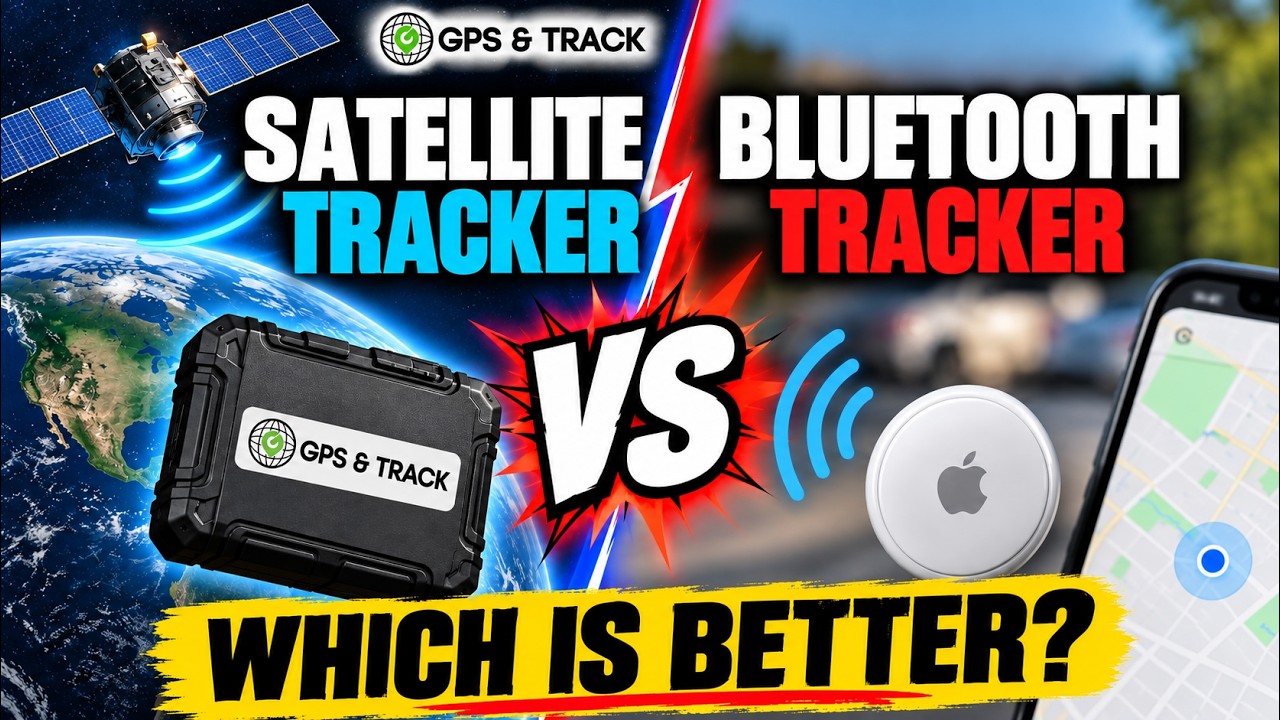
A Phoenix to Vegas Road Test
Bluetooth trackers are everywhere right now. They’re cheap, they’re small, and plenty of people assume they do the same job as a real GPS tracker. To show the actual difference, the GPS & Track team ran a simple test: put one satellite GPS tracker and five or six Bluetooth trackers in the same car, then drive it from our Phoenix office to Las Vegas.
Same car, same route, same moment in time. The only variable was the technology.
The Setup
On September 25, the car left our office carrying an OBD fleet tracker (real-time satellite GPS) alongside several Bluetooth units. These weren’t knockoffs pulled off a shelf. They were Bluetooth trackers we manufactured ourselves, among the most capable on the market, and they were working exactly as designed.
That matters, because this isn’t a story about bad Bluetooth hardware. It’s a story about what Bluetooth tracking can and can’t do.
Leaving Phoenix
Within minutes of pulling out, the satellite tracker showed the car doing 70 mph on the road. Every Bluetooth unit still showed it parked at the office.
By the time the car was on the 51 freeway, one Bluetooth tracker had updated, but it was placing the car 5 to 6 miles off. The rest hadn’t moved. On 7th Street, the Bluetooth units were running roughly 15 to 20 minutes behind. Near Indian School, the satellite tracker showed exactly which lane the car was in, while one Bluetooth unit hadn’t reported a new location in over an hour.
Out on the Highway
As the car headed north on the I-17, the satellite tracker showed the lane, direction, and speed in real time. The Bluetooth trackers were all still showing Phoenix.
Near Lake Pleasant, the fleet tracker had the car at 76 mph. The Bluetooth units were still in Phoenix, even with cell phones in the car and all along the route. At Morristown, the Bluetooth trackers finally caught a signal and jumped forward, landing close behind the real-time tracker for a moment. By Wickenburg, where the satellite tracker showed the car passing through town in real time, the Bluetooth units were stuck back in Morristown again.
When the car made a quick stop in Wickenburg, the satellite tracker showed exactly where it was parked. The Bluetooth trackers still showed it out on the freeway near the lake.
A couple of hours later, the satellite tracker had the car at a gas station in Kingman, down to the specific pump. The closest Bluetooth unit was still showing it on the freeway, about 20 to 30 minutes behind.
Arriving in Vegas
Once the car parked in Las Vegas, the fleet tracker showed the exact parking space. The Bluetooth trackers did update eventually, but they were scattered across the complex, with one placing the car on the other side of the property. Close, but not exact.
Why Bluetooth Lags
Bluetooth trackers don’t have their own connection to the outside world. They rely on nearby phones and Wi-Fi to relay their location, which means they only update when a compatible device happens to be close enough and passes the signal along. On a busy street that can be fairly quick. On an open highway, or anywhere with spotty reception, updates can stall for long stretches.
A satellite GPS tracker reports its own position directly and continuously. It doesn’t wait for a stranger’s phone to walk by.
What This Means for Theft Recovery
Picture this car as a stolen vehicle or a stolen piece of equipment. With the satellite tracker, you know the lane it’s in, the direction it’s headed, and how fast it’s going, all as it happens. That’s information police can act on. With Bluetooth, you’re sending officers to where the vehicle was 20 minutes or an hour ago. On the highway, that can mean dozens of miles of difference.
Bluetooth still has a place. For low-value items or finding something once it has stopped moving, a ballpark location can be good enough. Think of it as knowing your car is somewhere in a huge parking lot. Satellite tracking tells you which space it’s in.
If you’re tracking something that matters, like a work vehicle, a trailer, or equipment you can’t afford to lose, real-time satellite tracking is the difference between following a live pin and chasing an old one.
Want to try it out?
See our platform and trackers in action by checking out our live demo below.